


What is Hello Woods?

What is Hello Woods?


Biodiversity
Tower of Life
Biodiversity and Tower of Life
Hello Woods provides an environment where many living creatures can inhabit by managing various forests.
"Biodiversity" cannot be maintained unless living creatures with different individualities directly or indirectly support each other, have connections, and maintain balance.
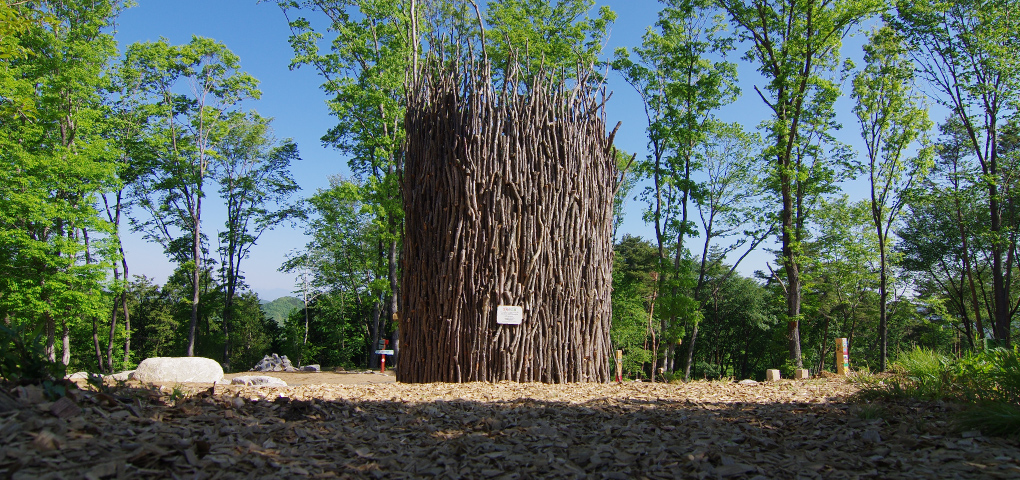
You can also observe the connections between living creatures in the "Tower of Life."
The "Tower of Life" is built by stacking logs that come from trees felled in the forest, and it is filled with plenty of fallen leaves inside.
These logs are actually used by many living creatures in various ways.
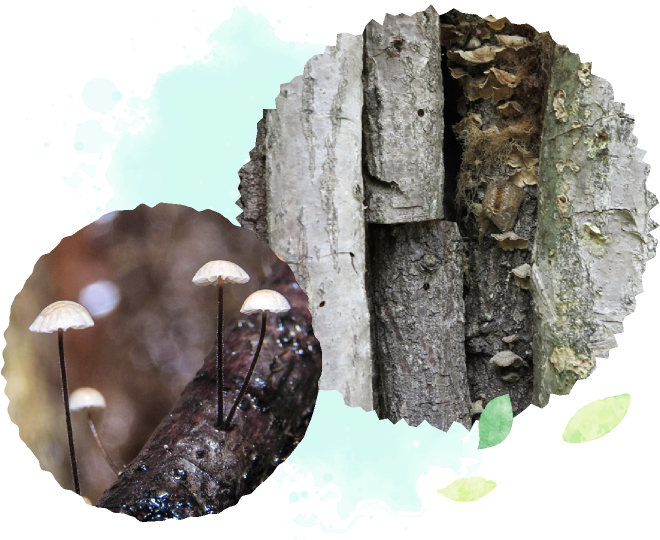
For example, when logs begin to decompose due to fungi, longhorn beetles lay their eggs, and the larvae grow by voraciously eating the wood inside.
Woodpeckers target those larvae. The larvae inside decayed wood, which is easy to bore into, are a delicacy for them.
On the other hand, the fallen leaves inside the tower also transform into leaf mold, which serves as food for other living things, through the action of fungi. Speaking of the creatures that grow in that soft leaf mold...
Yes, the larvae of rhinoceros beetles. These larvae are targeted by various creatures. Birds such as crows quickly seize them when they come to the surface, while underground, ants and moles, and when dug up, raccoons and wild boars...
Just by thinking a little about these two types of larvae, you can see how many living things are involved and how the connections of life become visible.
The "Tower of Life," a place where many living things gather, gradually decays over about four years through the involvement of numerous organisms ranging from fungi to mammals, eventually returning to the soil. Then, the process of building a new tower begins again and again, creating an environment that serves as a refuge for living creatures.
In the forest, there are countless connections that exist from the ground to the top, making it possible for the forest to thrive. It is the continuous cycle of these connections that allows the forest to exist.
Living Things
that inhabit Hello Woods
-
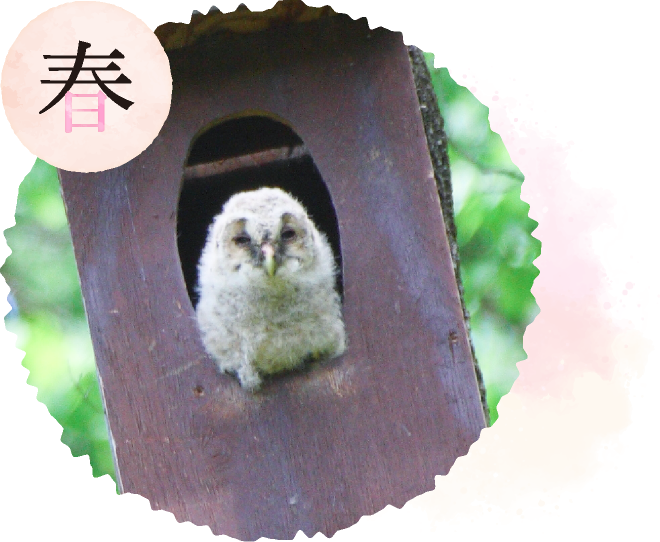
In early spring, when the leaves of the upper trees have not yet opened, katakuri flowers begin to bloom in various parts of the forest. Then, as the warmth increases, the comma butterflies that have overwintered as adults start to fly, and other insects also begin to move as if they have been waiting for this moment.
Also, one of the highlights of this season is the lively presence of many tadpoles around the waterside. After that, the satoyama cherry blossoms, starting with the wild cherry trees, begin to bloom one after another. -
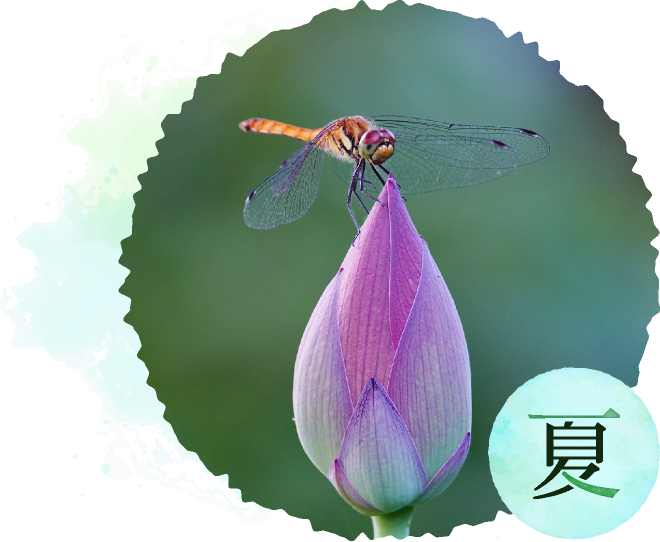
Thanks to the leaves of the trees that block the strong sunlight, the perceived temperature inside the forest is quite different.
The insects that gather around tree sap vary depending on the time of day; rhinoceros beetles appear at night, while stag beetles can be seen even during the day. And it’s not only beetles that love tree sap—large butterflies like the Great Purple Emperor also come.
You can also encounter large dragonflies such as the golden-ringed dragonfly in the forest and near the water. -
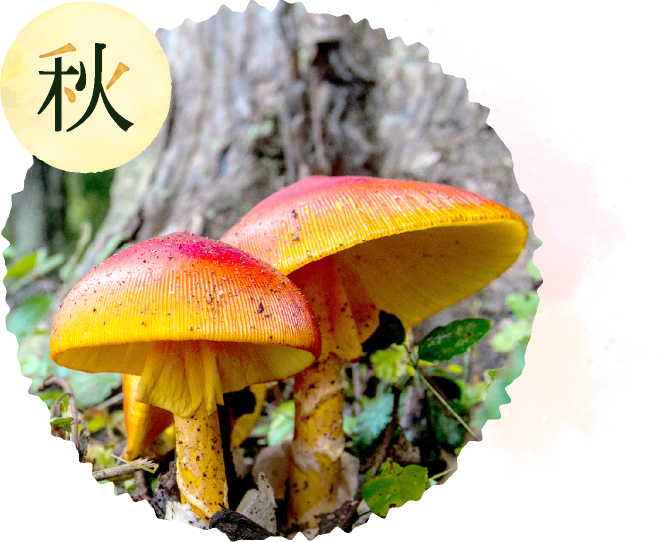
The autumn darters descend from the mountains to the cooled terraced rice fields and watersides.
And the white of the wild asters, the yellow of the Yakushisou, the pale purple of the beautyberry... Not only the changing colors of the tree leaves but also the flowers and fruits decorate the forest. Speaking of fruits, acorns come to mind. The acorns of the konara oak and kunugi oak begin to fall.
Autumn is the season when red-backed voles and Japanese squirrels run around gathering acorns; you might be able to find traces of their feeding. -
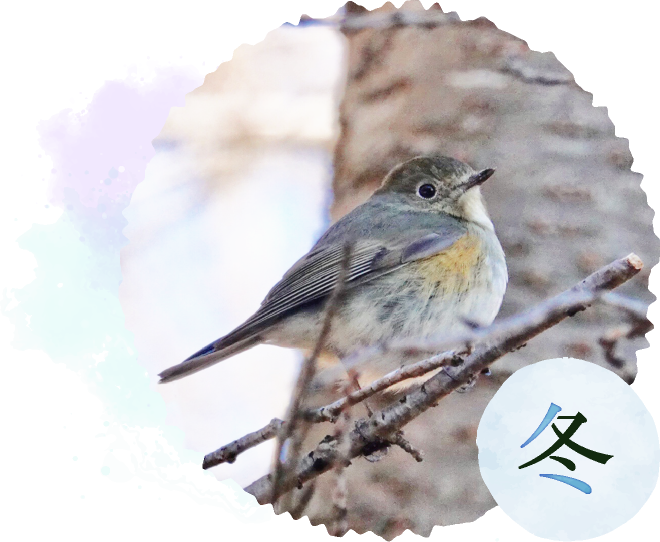
In no time, the leaves fall from the trees, and as the sky becomes visible through the forest, it becomes easier to observe wild birds.
By following the sound of pecking, you can find woodpeckers like the Japanese pygmy woodpecker and the great spotted woodpecker. In winter, it’s also easier to spot mixed flocks of small birds such as the Japanese tit and long-tailed tit, as their lively calls can be heard. The fluorescent yellow sacs hanging from the tips of tree branches are the cocoons of the yellow silk moth, a winter-only sight.
Please take a leisurely walk while enjoying the crisp sound of fresh fallen leaves.

Hellowoods Walk
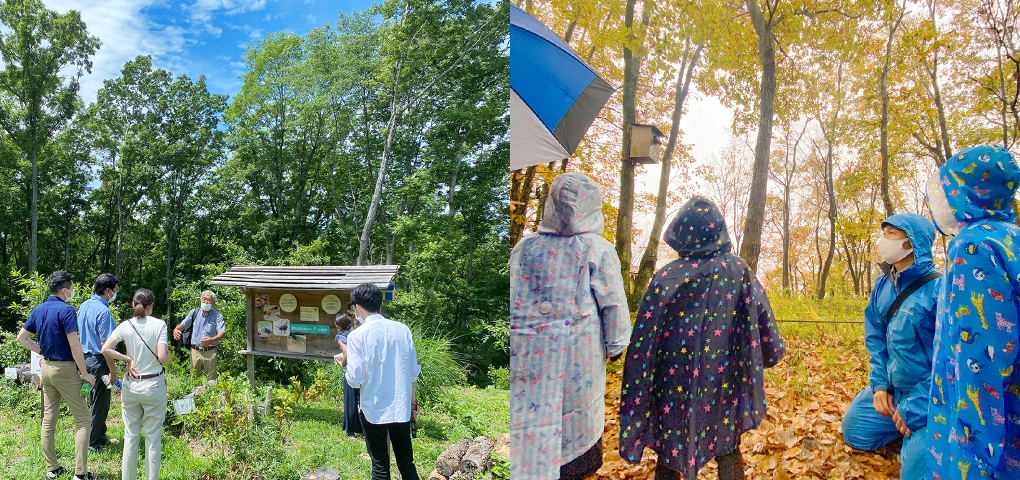
The Hello Woods forest is full of various ways to enjoy each season.
We walked through the forest, observed the creatures,
connected with nature, and reported on the experiences of those who discovered the charm of the forest!